My downright violence and storm of fortunes
May trumpet to the world: my heart's subdued
Even to the very quality of my lord:
I saw Othello's visage in his mind,
And to his honour and his valiant parts
Did I my soul and fortunes consecrate.
So that, dear lords, if I be left behind,
A moth of peace, and he go to the war,
The rites for which I love him are bereft me,
And I a heavy interim shall support
By his dear absence. Let me go with him.
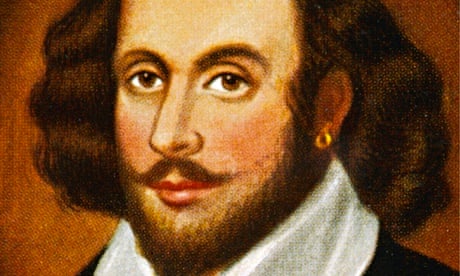
This monologue I have chosen is from William Shakespeare's Othello, 1603. The monologue is by Desdemona in Act 1, Scene iii.
I studied Othello at Bhasvic when I took my English Literature AS Level and I always really enjoyed this play and studied it in depth.
This monologue I will definitely use as 1 of my Classical monologues for auditions for drama school and Universities. I am mainly applying for Universities but I am applying for Italia Conti & possibly another drama school, but I have not decided which one yet.Othello is typically a Tragedy, and Desdemona is very much the centre of all the tragedy as she is Othello's wife!
As I have been made aware of, I should pick at least TWO Classical monologues, and have to be a tragedy AND a comedy, so I cannot pick two Shakespearian tragedies or comedies.
Othello is a definite choice for me and this is my favourite monologue by Desdemona, I feel I can relate to Desdemona, as she is a strong woman, although she is stereotyped as very meek and obeying, there is a depth to her persona that really interests me as I can relate to this, and I have just always found myself drawn to her character, even when i was only 16 years old at Sixth form college I related to her, and even more so now as I am 4 years older and have developed a maturer understanding of her motives and objectives.
For My second Shakespeare choice, I am contemplating reading the play "The Tempest" I have never read the whole play, but I have read little parts of it when studying English Literature and Drama at school and sixth form. It is a romantic comedy, which contrasts highly with Othello as it is such a serious and political play, so I feel this contrast will be interesting, and will show how I have studied two completely different plays, and carefully selected a monologue after reading the play and getting to know the characters.
I am aware that there are only 1-2 female parts in The Tempest, Miranda, who is the daughter of Prospero, Miranda has never been around any men other than her father and Caliban(her fathers servant) Miranda has a very innocent and naive nature, and does not make judgements on people and is very genuinely kind and caring. I am not sure if this character is the best choice for me, as I am always more drawn to female characters who have more depth to them and have a darker side, like Desdemona. When I have read the play I will make a decision whether to use a monologue from this play.
I was always under the impression that Ariel, who is a spirtual figure in this play was a female. But during my research I have learned that Ariel does not actually have a gender, Ariel is commonly referred to as a "he" as he is Prospero's servant who he saved from imprisionment.
"Ariel - Prospero’s spirit helper. Ariel is referred to throughout this SparkNote and in most criticism as “he,” but his gender and physical form are ambiguous. Rescued by Prospero from a long imprisonment at the hands of the witch Sycorax, Ariel is Prospero’s servant until Prospero decides to release him. He is mischievous and ubiquitous, able to traverse the length of the island in an instant and to change shapes at will. He carries out virtually every task that Prospero needs accomplished in the play." (Sparknotes)
This monologue by Miranda, draws my attention, I have been reading all the monologues by Miranda, and this is the only one that I feel I could perform well as I understand it to a degree, I am goign to have to research further and when I have read the whole play I am confident I will understand it further:
One of my sex; no woman's face remember,
Save, from my glass, mine own; nor have I seen
More that I may call men than you, good friend,
And my dear father: how features are abroad,
I am skilless of; but, by my modesty,
The jewel in my dower, I would not wish (DOWER is a provision accorded by law, but traditionally by a husband or his family, to a wife for her support in the event that she should survive her husband (i.e., become a widow)
Any companion in the world but you,
Nor can imagination form a shape,
Besides yourself, to like of. But I prattle (to prattle is to chat idly, or to " babble" foolish babbling or rambling)
Something too wildly and my father's precepts
I therein do forget
She is explaining how she has never been around a woman, as she was bought to the island at a very young age, she has been so isolated from the world, and as she is only 15 years old, she has very naive perceptions of people, allowing her to be violated by men, in particular, Ferdinand who is set to marry her, and as well Caliban, who has admitted that he once tried to rape Miranda, both men would like to take Miranda's " virgin knot" so she is very wanted by both men, but in different ways. I feel Miranda sounds older than a 15 year old girl, I was surprised when I learned her age.
This is a modern version of the monologue I am interested in I found on Sparknotes:
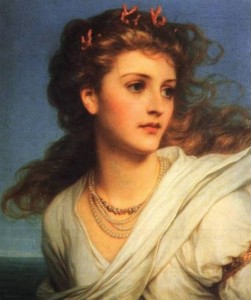
I do not know
One of my sex, no woman’s face remember—
Save, from my glass, mine own. Nor have I seen
More that I may call men than you, good friend,
And my dear father. How features are abroad
I am skill-less of, but, by my modesty,
The jewel in my dower, I would not wish
Any companion in the world but you,
Nor can imagination form a shape
Besides yourself to like of. But I prattle
Something too wildly, and my father’s precepts
I therein do forget.
This monologue is aimed at Ferdinand, as they are expressing their love for each other. The more I depict it, the more I actually really like this monologue. It is quite deep, and it is showing how Miranda has never been around any of men other than her father and Ferdinand, and servants of her father.

No comments:
Post a Comment